
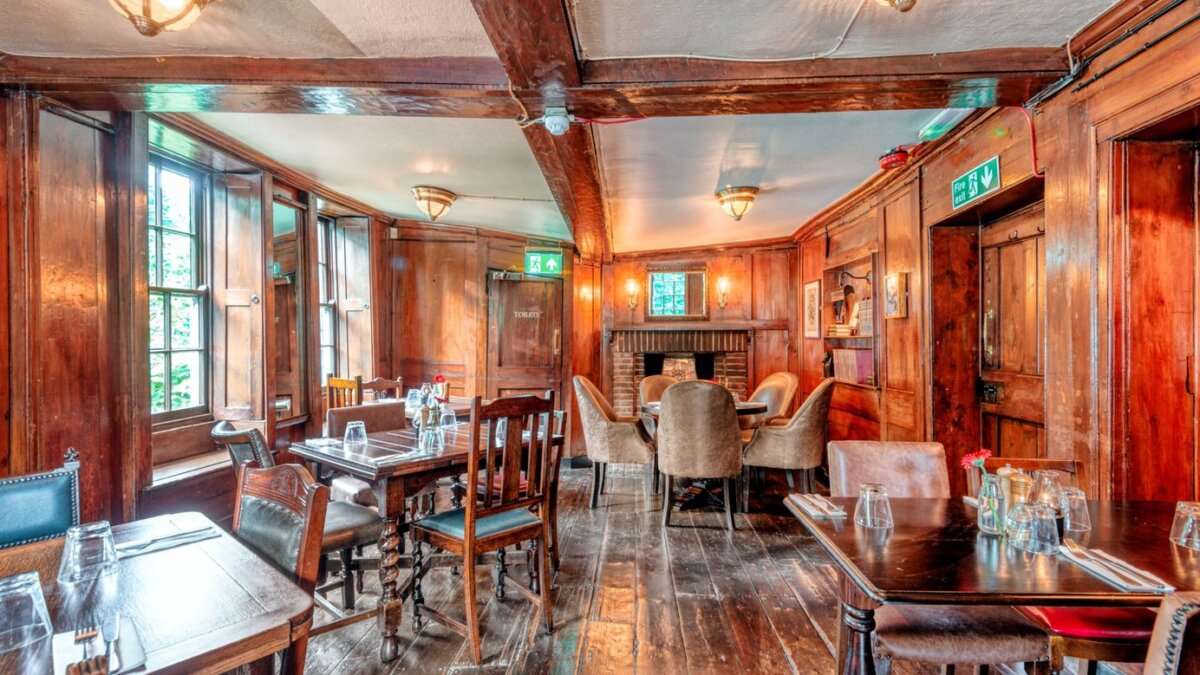
These are not heritage attractions dressed up as pubs. They are working pubs that happen to have been serving drinks for three, four, or five centuries. The floors creak. The ceilings press low. The beer is cold. Here is where to find them and why each one earns the journey.
A quick word about age claims before we start. London’s oldest pubs wear their histories with considerable pride and occasional embellishment. The Great Fire of 1666 destroyed most of the city’s medieval drinking establishments, which means that very few buildings you can drink in today genuinely predate it. Some of the pubs on this list sit on sites where drinking has happened for centuries even if the current structure came later. That is still worth knowing and still worth visiting. Wherever the history is complicated or disputed, this post will say so.
What matters more than a founding date is whether a pub still feels like itself. Whether it has not been renovated into blandness, whether it has kept its warren of small rooms and uneven floors and the particular quality of light that comes from not having enough windows. By that measure, every pub on this list is the real thing.
The Prospect of Whitby
The strongest claim to being London’s oldest riverside pub belongs to the Prospect of Whitby in Wapping, which traces a drinking establishment on this site to around 1520. The original flagstone floor is still underfoot when you walk to the bar, and that alone is worth the journey east. For most of its early history the pub was known as The Devil’s Tavern, which gives you a reasonable indication of the clientele. River thieves, smugglers, and the kind of people who made a living from the boats passing on the Thames.
The current building is largely eighteenth and nineteenth century rather than Tudor, which is true of most pubs that claim very old foundations. But the terrace over the river is one of the finest spots to drink in London, and the replica noose hanging over the water is a nod to Judge Jeffreys, who was said to watch executions at the nearby Execution Dock from this very spot. Come in winter when the crowds are thin and sit as close to the river as you can get.
The Grapes
There has been a pub on this spot on Narrow Street since 1583, with the current building dating from around 1720. The Grapes is narrow and dark-panelled and sits right over the Thames in Limehouse, which was once a working dock neighbourhood full of sailors and the writers who came to romanticise them. Dickens described a pub strongly resembling the Grapes in the opening pages of Our Mutual Friend. It is said that unsavoury longshoremen once drowned unwitting patrons in the river from this very building, which the current owners have presumably stopped doing.
Since 2011 the pub has been co-owned by Sir Ian McKellen, who used to run the Monday pub quiz and still drops in with enough regularity that staff will tell you cheerfully he might appear at any moment. There is a small bronze Gandalf tucked behind the bar. The upstairs restaurant does excellent fish. The balcony over the Thames on a warm evening is one of the quieter pleasures in east London.
The Spaniards Inn
At the edge of Hampstead Heath, where the road narrows to a single lane beside the old tollhouse, the Spaniards Inn has been standing since 1585. Its guest list over the centuries reads like a syllabus for an English literature degree. Keats wrote part of Ode to a Nightingale nearby. Dickens brought Mrs Bardell to the garden in The Pickwick Papers. Byron drank here. Shelley drank here. The highwayman Dick Turpin is said to have stabled Black Bess in what is now the car park, which is almost certainly embellished but makes a good story.
The pub itself is low ceilinged and atmospheric, with a garden that in summer is one of the loveliest outdoor drinking spaces in the city. Come after a walk on the Heath. The combination of cold air, tired legs and a pint in a pub that has been here since the reign of Elizabeth I is one of those London experiences that is genuinely difficult to replicate anywhere else.
Ye Olde Cheshire Cheese
The original pub on this site was destroyed in the Great Fire of 1666 and rebuilt the following year, which makes the current structure one of the oldest surviving pub buildings in central London. It sits down a narrow alley off Fleet Street and the entrance is easy to miss, which is appropriate because the Cheshire Cheese has always had the quality of somewhere you are supposed to have to find. Inside it is a labyrinth of small rooms across multiple floors, with low ceilings, dark wood, sawdust on the floor in places, and high-backed wooden pews that encourage the particular kind of conspiratorial conversation that has been happening here for three and a half centuries.
The literary roll call is extraordinary even by London standards. Johnson, Dickens, Thackeray, Tennyson, Conan Doyle, Yeats, and Mark Twain all drank here. A list of monarchs on whose reign the pub has served is mounted outside the entrance. Order something dark and find the smallest room on the lowest floor. That is where you want to be.
The George Inn
The George is the only surviving galleried coaching inn in London, which is a designation that does not quite convey what it means until you walk into the courtyard and see it. Two tiers of wooden galleries look down over a cobbled yard where coaches once pulled in from the road south. The present building dates from 1677, rebuilt after a fire destroyed the previous structure. It is owned by the National Trust and sits on Borough High Street, which was once lined with coaching inn entrances serving as the southern terminus for road travel into the city.
The inn stands almost exactly where Chaucer’s pilgrims set off for Canterbury in The Canterbury Tales and Dickens mentioned it by name in Little Dorrit. Sit in the courtyard in summer with a pint of something from the cask list. In winter the interior rooms are warm and low-lit and full of the particular comfort of a very old building that has been keeping people dry for a long time. Borough Market is a five minute walk away, which makes a Saturday here extremely easy to fill.
The Anchor
There has been a tavern on this spot on Bankside for over eight hundred years, which makes the Anchor one of the longest-serving drinking sites in London even if the present building dates from 1676. It began as the taproom for the Anchor Brewery next door, parts of which survive behind the pub today. On the night of the Great Fire of 1666, Samuel Pepys came to this bank of the Thames to watch the city burning across the river, and it is widely believed he watched from roughly this spot. The fire never reached the south bank, so the pub was spared the destruction it was witnessing.
The Anchor sits just minutes from the Globe Theatre and Tate Modern, which makes it a natural stopping point on any South Bank afternoon. It gets busy, especially at weekends. Come on a weekday lunchtime when the tourist flow slows and you can actually hear yourself think in the older rooms at the back. The Thames views from the terrace remain as good as they have ever been.
The Seven Stars
The Seven Stars sits on Carey Street directly behind the Royal Courts of Justice, which explains both its clientele and its atmosphere. Barristers, judges and court reporters have been drinking here for centuries. The pub dates its founding to 1602, fourteen years before Shakespeare died, and it is possibly the only pub in central London that survived the Great Fire entirely. Historians are cautious about the precise date and believe the building may be from the 1680s rather than the early 1600s, but either way it is a very old pub in a very old building and it looks the part completely.
The resident pub cat wears a judge’s lace collar piece and tends to position itself on the bar or on a stool with the authority of someone who has been doing this for several terms. The food is better than it needs to be. The pub is small and fills up quickly at lunch, so arrive early or late. The landlady has been running it since 2001 with the same standards and menu that have made it one of the most quietly beloved pubs in central London.
Ye Olde Mitre
Finding Ye Olde Mitre is half the experience. It is tucked down Ely Court, a narrow passage off Hatton Garden that most people walk past without noticing. The current building dates from 1773 but a pub has been on or near this site since the sixteenth century, originally built for the servants of the Bishop of Ely whose palace once stood here. Inside a glass case behind the bar is what is claimed to be the preserved trunk of a cherry tree around which Elizabeth I once danced with her favourite Sir Christopher Hatton, after whom neighbouring Hatton Garden is named. The cherry tree story is almost certainly legend. But it is a good legend.
Ye Olde Mitre has won pub of the year awards with regularity and it is not hard to see why. It is one of those pubs that has resisted every pressure to become something more polished or more profitable and simply remained itself. The beer is served on cask. The rooms are snug. It closes on Sundays and shuts at 11pm on Saturdays, which is the pub’s way of making clear it is not here to accommodate everyone. Go on a Friday afternoon when the Hatton Garden workers spill out and the alleyway fills with people who could not find a better place to be.